
Better paint results with expert project management

TL;DR:
Effective project management ensures longer-lasting, high-quality paint jobs by coordinating all work stages.
Proper planning addresses climate challenges and eco-friendly material use for durable finishes.
Skilled project management reduces costs, improves efficiency, and guarantees client satisfaction.
Most homeowners assume that buying premium paint is the secret to a flawless, long-lasting finish. That assumption is expensive and wrong. The real difference between a paint job that peels in two years and one that holds strong for a decade comes down to how the project is planned and managed. In Los Angeles, where intense sun, marine humidity, and strict environmental regulations all shape what works, project management is the hidden engine behind every quality result. This guide breaks down how professional project management drives craftsmanship, eco-compliance, and lasting value for LA homeowners and property managers.
Table of Contents
Key Takeaways
Point | Details |
Preparation is critical | Most paint job quality and durability depend on how well surfaces are prepared and each stage managed. |
Eco-materials do not compromise | Low-VOC paints offer the same long-term results as traditional options while supporting green standards. |
Modern tools boost value | Project management technology delivers faster, more accurate estimates and saves clients time and money. |
Expertise prevents mistakes | Careful management by skilled teams eliminates common issues like peeling, chipping, and environmental non-compliance. |
Why project management matters in painting
When most people hire a painting contractor, they focus on color samples and price quotes. What they rarely see is the planning infrastructure that separates a mediocre job from an exceptional one. Project management in painting means coordinating every moving part: scheduling, material sourcing, crew assignments, surface preparation, quality checks, and client communication. Each of these elements affects the final result more than the paint brand on the label.
Surface preparation is the clearest example. Surface preparation techniques are often treated as a formality, but they are the foundation of everything. Surface prep takes 70% of time on LA properties but determines 90% of the quality outcome. Skip it or rush it, and even the most expensive paint will bubble, crack, and fail within months.
LA’s climate adds another layer of complexity that only disciplined project management can address. Coastal neighborhoods deal with salt air and moisture. Inland areas face extreme heat and UV exposure. A project manager accounts for these variables by scheduling exterior work during optimal weather windows and selecting materials rated for local conditions. Proper timing avoids issues like humidity trapping moisture under fresh coats or midday sun causing paint to dry too fast and lose adhesion.
Here is what strong project management delivers on a painting job:
Detailed scope planning so nothing is missed or improvised
Consistent quality standards applied at every stage
Eco-compliance through verified use of low-VOC materials
Clear communication so you always know what is happening and why
Milestone checks that catch problems before they become costly
“The best paint in the world cannot compensate for poor planning. Project management is what turns good materials into great results.”
For exterior prep techniques specifically, a project manager ensures crews follow a precise sequence: cleaning, sanding, patching, priming, and only then painting. That sequence is not flexible. Skipping steps to save time is the single most common reason paint jobs fail prematurely.
Essential project management steps for quality painting
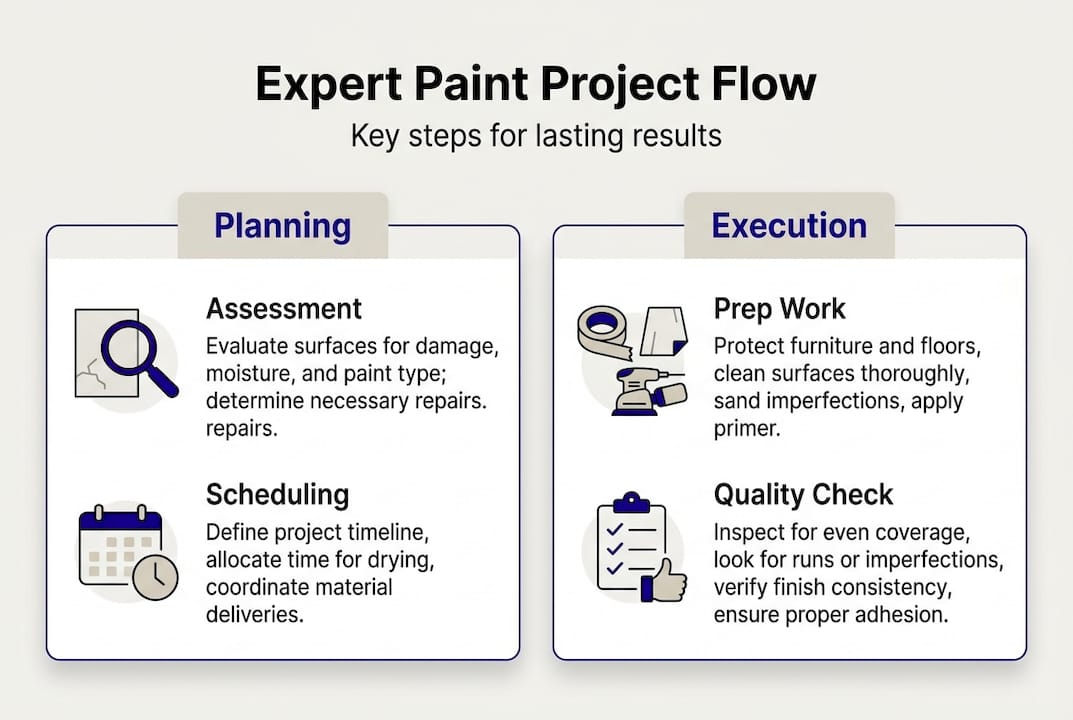
Professional painting projects follow a structured sequence that mirrors what is known in the industry as a Waterfall methodology. Waterfall project management moves through defined stages in order: requirements, design, implementation, testing, deployment, and maintenance. For painting, this translates into six clear phases that protect your investment at every turn.
Assessment: The project manager inspects the property, documents existing conditions, identifies problem areas, and defines the full scope of work. Nothing is assumed.
Preparation: Crews clean, sand, patch, and prime all surfaces. This is the longest phase and the most critical.
Priming: A quality primer coat is applied to ensure adhesion and block stains. The type of primer is chosen based on the surface material and paint system being used.
Painting: The finish coats go on in the correct number of layers, with adequate dry time between each coat.
Quality assurance: The project manager inspects every surface against the original scope. Touch-ups are completed before the client walkthrough.
Wrap-up and maintenance guidance: The crew cleans up completely, and you receive documentation on what was used and how to maintain the finish.
Here is a quick breakdown of who is involved and what matters most at each stage:
Stage | Key personnel | What matters most |
Assessment | Project manager, client | Accuracy of scope |
Preparation | Crew lead, laborers | Surface condition |
Priming | Skilled painters | Adhesion quality |
Painting | Full crew | Coverage and consistency |
Quality assurance | Project manager | Defect detection |
Wrap-up | Project manager, client | Documentation and handoff |
For painting tips for durability, the quality assurance phase is where most contractors cut corners. A thorough QA walkthrough catches thin coverage, missed spots, and adhesion issues while they are still easy and inexpensive to fix.
Pro Tip: Always request a pre-work walkthrough to align on expectations, and a post-work walkthrough before final payment. These two conversations protect you and give the contractor a fair chance to deliver exactly what was promised.
How eco-friendly materials fit into the project plan
Low-VOC paint is not just a marketing term. VOC stands for volatile organic compounds, the chemicals in traditional paints that evaporate into the air as paint dries. High-VOC paints contribute to indoor air pollution and smog, which is a serious concern in Los Angeles where air quality regulations are among the strictest in the country.
The good news is that low-VOC paint options have advanced dramatically. Modern low-VOC formulas match traditional paints in coverage, adhesion, and color richness. And according to commercial painting procedures, exterior paint jobs last 7 to 10 years and interiors 10 to 15 years with proper management, regardless of whether low-VOC or traditional products are used. The durability gap that once existed is essentially closed.
Here is how the two options compare:
Feature | Traditional paint | Low-VOC paint |
Durability | 7 to 15 years | 7 to 15 years |
Emissions | High | Minimal |
California compliance | Variable | Meets CARB standards |
Indoor air quality | Poor during application | Safe for occupants |
Odor | Strong | Mild to none |
Project management is what makes eco-friendly materials work in practice, not just on paper. A project manager ensures that low-VOC products are stored correctly, applied at the right temperature and humidity, and given adequate cure time. Without that oversight, even the best eco-friendly paint can underperform.
Key advantages of integrating eco-friendly materials through proper project management:
Meets California Air Resources Board (CARB) standards
Reduces health risks for your family, tenants, or employees during and after painting
Supports sustainable property management goals
Qualifies for green building certifications in some cases
Pro Tip: Ask your contractor for product data sheets on every paint they plan to use. A reputable contractor will have these ready and will be able to explain their eco-compliance track record on past jobs. If they hesitate, that is a red flag.
For a deeper look at what these products involve, the guide to low-VOC paint breaks down what to look for and what questions to ask before signing a contract.
Boosting efficiency and value with modern project tools
Beyond planning and materials, technology is reshaping what professional project management looks like in the painting industry. Contractors who use digital tools deliver faster, more accurate, and more transparent service. That translates directly into savings and fewer headaches for you as a property owner.
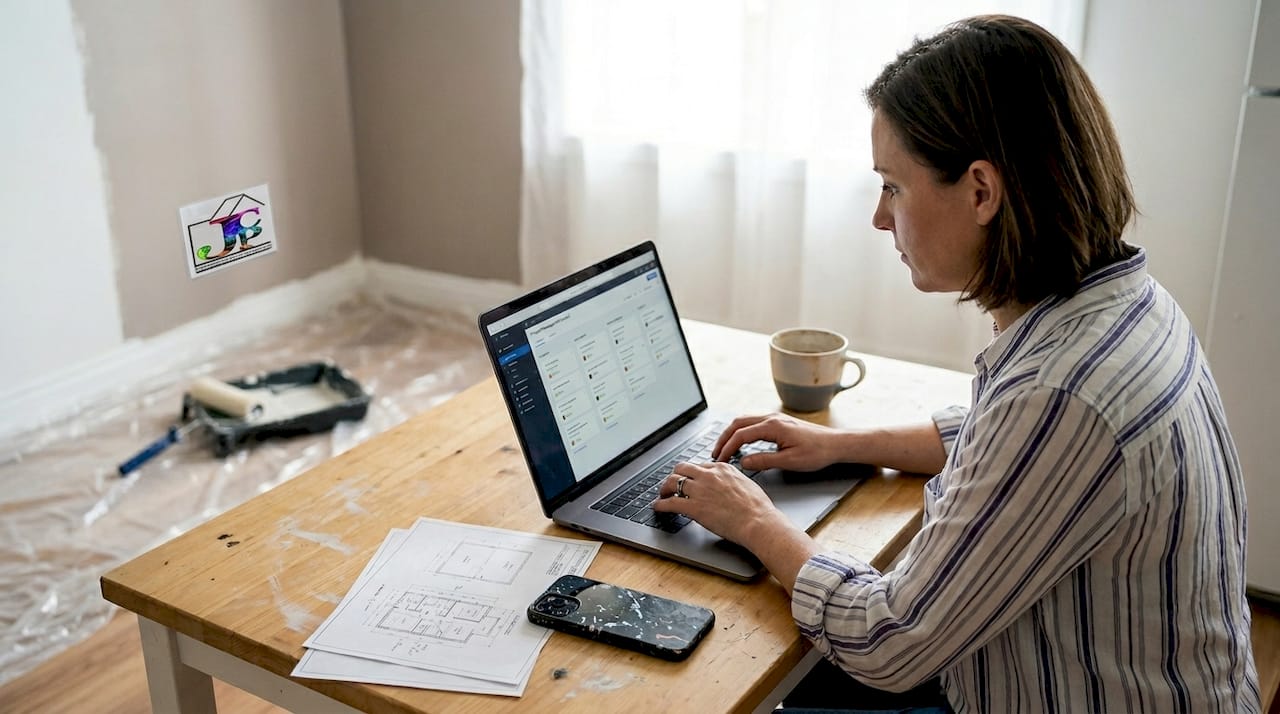
The numbers are striking. ERP implementation in a painting contractor business yielded 50% faster estimates, 95% job costing accuracy, an 8 to 12% profit margin increase, and 80% less payroll processing time. Those efficiency gains do not just benefit the contractor. They mean faster project starts, fewer billing errors, and more competitive pricing for clients.
Here is what modern project tools enable for painting contractors:
Digital estimates with line-item breakdowns sent directly to clients
Real-time cost tracking so projects stay on budget
Scheduling software that coordinates crews, materials, and inspections
Client portals for transparent communication and document sharing
Automated quality checklists tied to each project phase
When a contractor uses these tools, you spend less time chasing updates and more time seeing results. The project runs smoother, surprises are rare, and accountability is built into every step. You can follow the latest painting trends to understand how technology is continuing to shape what clients should expect from professional contractors in 2026.
The shift toward tech-enabled project management is not a luxury. It is becoming the baseline expectation for any contractor serious about quality and client satisfaction.
Why most paint jobs fail: what project management reveals
After 16 years of painting homes and commercial properties across Los Angeles, the pattern is clear. Paint jobs fail because of planning failures, not paint failures. Homeowners often blame the product when the real culprit is a contractor who skipped steps, rushed prep, or ignored climate conditions during scheduling.
Conventional wisdom says to shop for the best price or the most popular paint brand. Neither of those factors predicts a good outcome. What actually predicts a good outcome is the contractor’s project management discipline. Do they document everything? Do they follow a structured sequence? Do they use verified eco-compliant materials and communicate clearly at every stage?
The commercial painting procedures that top LA contractors follow recommend seeking contractors with proven project management expertise, verifiable licensing, and tools like PaintProjex for tracking efficiency. That is the standard worth holding every contractor to.
When you hire a skilled painter, you are not just buying labor. You are buying a system. The contractors who plan well, communicate clearly, and manage every detail are the ones whose work still looks great a decade later. That is not luck. That is project management.
Get your Los Angeles paint project managed the right way
Now that you understand what separates a lasting paint job from a disappointing one, the next step is finding a team that puts these principles into practice on every project.
At Johnny’s Custom Painting, we apply structured project management to every interior and exterior job we take on in Los Angeles. From the initial assessment to the final walkthrough, every stage is planned, documented, and executed with care. We use low-VOC, eco-friendly materials that meet California standards without compromising durability. Browse our interior painting portfolio and exterior painting portfolio to see the results firsthand, then contact your trusted Los Angeles painting contractor to schedule a free consultation.
Frequently asked questions
How does project management improve paint durability?
Project management ensures each stage, especially preparation and quality checks, is carefully executed. With proper management, exteriors last 7 to 10 years and interiors 10 to 15 years.
Why choose eco-friendly paints in Los Angeles?
Eco-friendly paints like low-VOC options reduce emissions and meet California’s strict air quality standards. Low-VOC paints match traditional paint durability while keeping your indoor air clean.
What should I ask a painting contractor before hiring?
Ask about their project management process, the eco-friendly materials they use, and their licensing status. Contractors with PM expertise consistently deliver better craftsmanship and eco-compliance.
Does using a project manager make painting more expensive?
Professional management actually reduces costs over time by minimizing mistakes and improving efficiency. ERP tools alone have driven an 8 to 12% profit margin increase for painting contractors, savings that flow back to clients through competitive pricing.
Recommended
Comments