
Why repaint commercial buildings in 2026? Boost value

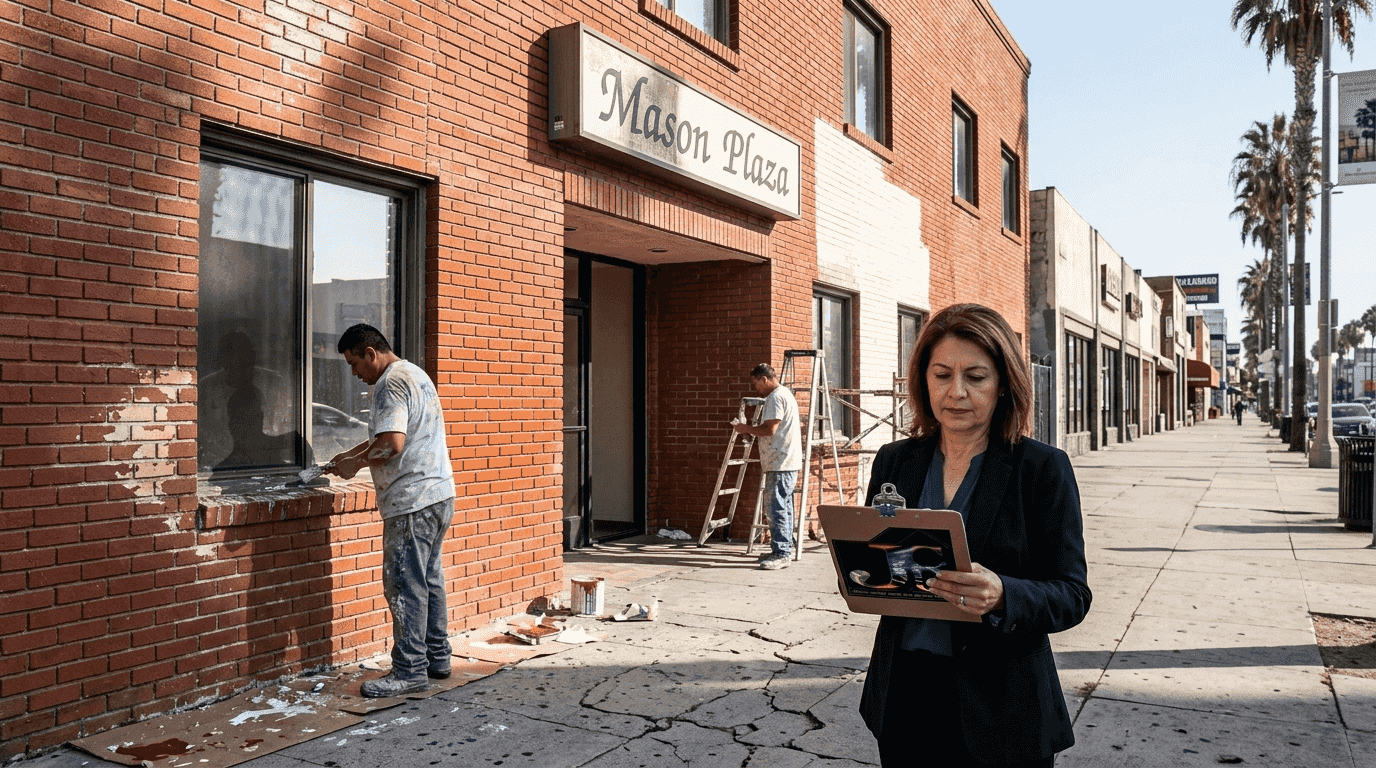
Many property owners view repainting as a cosmetic afterthought, but this misconception costs them thousands in lost property value and tenant appeal. In Los Angeles’ demanding climate, where sun exposure and urban pollutants accelerate paint degradation, strategic repainting becomes a critical investment rather than routine maintenance. This guide reveals how timely repainting protects your building structure, attracts quality tenants, and delivers measurable returns on investment. You’ll learn exactly when to schedule repainting, which surfaces demand priority attention, and how professional preparation techniques extend paint life by years. Whether you manage retail spaces, office complexes, or industrial facilities, understanding these repainting fundamentals helps you maximize property value while minimizing long-term costs.
Table of Contents
How Repainting Enhances Commercial Property Value And Curb Appeal
Repainting Schedules: When And Why Timing Matters For Commercial Buildings
The Critical Role Of Surface Preparation In Lasting Commercial Repainting
Cost Considerations And Maintenance Strategies For Commercial Repainting
Frequently Asked Questions About Repainting Commercial Buildings
Key takeaways
Point | Details |
Value enhancement | Fresh paint increases property value by improving curb appeal and signaling proactive maintenance to buyers and tenants. |
Strategic timing | Exteriors need repainting every 4-10 years while interiors require attention every 2-5 years based on traffic patterns. |
Preparation matters | Thorough surface prep prevents early paint failure and extends coating lifespan by ensuring proper adhesion. |
Cost reduction | Assessment-based maintenance reduces costs by 35-50% compared to full elevation repaints. |
Climate factors | South and west-facing walls degrade 40-60% faster in LA’s intense sun exposure. |
How repainting enhances commercial property value and curb appeal
Fresh paint creates immediate visual impact that influences tenant decisions and customer perceptions within seconds of arrival. When prospects evaluate your property, exterior appearance communicates management quality before they step inside. A well-maintained paint job signals attention to detail and financial stability, factors that directly affect rental rates and occupancy levels.
Paint functions as your building’s primary defense against environmental damage. In Los Angeles, where UV radiation and urban pollutants attack exterior surfaces relentlessly, quality paint coatings block moisture infiltration that causes wood rot, metal corrosion, and concrete spalling. By maintaining this protective barrier, you prevent structural deterioration that requires expensive repairs far exceeding repainting costs.
Repainting schedules vary from 4-10 years depending on building type and exposure, making timely maintenance essential for preserving underlying materials. Neglected paint allows water penetration that damages roofing connections, window frames, and foundation interfaces. These hidden problems compound over time, transforming simple repainting projects into major renovation expenses.
Property valuations reflect maintenance history, and paint condition serves as a visible indicator of overall building care. Appraisers and potential buyers recognize that owners who maintain paint schedules likely address mechanical systems and structural needs proactively. This perception translates into higher sale prices and faster transaction timelines when you decide to sell.
Strategic color updates modernize building aesthetics and align with current commercial painting advantages that enhance brand positioning.
Consider these specific value drivers:
Curb appeal improvements attract premium tenants willing to pay 8-12% higher rents
Fresh exteriors reduce vacancy periods by creating positive first impressions
Updated color schemes differentiate your property in competitive markets
Professional finishes suggest quality standards that extend throughout the building
Color psychology influences customer behavior in retail environments and employee productivity in office settings. Choosing appropriate color palettes during repainting projects reinforces your brand identity while creating atmospheres that support business objectives. Retail spaces benefit from colors that encourage browsing and purchasing, while office environments need tones that promote focus and collaboration.
Repainting schedules: when and why timing matters for commercial buildings
Building type and functional use determine optimal repainting frequencies. Office buildings with moderate foot traffic typically need exterior repainting every 5-7 years and interior updates every 3-5 years. Retail environments face accelerated wear from constant customer traffic, requiring exterior attention every 4-6 years and interior repainting every 2-4 years to maintain appealing shopping atmospheres.
Building Type | Exterior Cycle | Interior Cycle | Priority Areas |
Office Complex | 5-7 years | 3-5 years | Lobbies, conference rooms |
Retail Space | 4-6 years | 2-4 years | Storefronts, sales floors |
Industrial Facility | 6-10 years | 4-6 years | High-moisture zones |
Healthcare | 5-7 years | 2-3 years | Patient areas, hallways |
Sun exposure dramatically affects paint longevity, with south and west-facing elevations degrading 40-60% faster than north-facing walls. Los Angeles properties experience intense afternoon sun that breaks down paint binders and fades pigments rapidly. You should inspect these vulnerable areas annually and plan targeted repainting before widespread failure occurs.
Interior repainting schedules depend heavily on space function and traffic volume. Healthcare facilities require frequent repainting every 2-3 years due to stringent cleanliness standards and heavy disinfectant use that degrades finishes. Restaurant kitchens and food preparation areas need specialized coatings reapplied every 2-4 years to maintain health code compliance and resist grease accumulation.
Industrial spaces benefit from epoxy coatings that withstand chemical exposure, abrasion, and temperature fluctuations. These durable finishes last 4-6 years in demanding environments where standard paints fail within months. Warehouse floors, manufacturing areas, and loading docks require industrial-grade coatings that maintain appearance despite constant equipment traffic and material handling.
Proactive scheduling prevents emergency repainting projects that disrupt operations and cost significantly more than planned maintenance. When you defer repainting until visible deterioration appears, underlying damage often requires extensive surface repairs before new paint application. This reactive approach doubles project costs and extends completion timelines.
Pro Tip: Schedule exterior inspections each spring to identify winter damage and plan summer repainting when optimal weather conditions ensure proper curing and long-lasting results.
Consider these timing factors:
Plan repainting during slow business periods to minimize operational disruption
Schedule exterior work during dry seasons for proper paint adhesion
Coordinate interior projects with lease turnovers or renovation cycles
Budget for painting schedule advantages that align with fiscal planning
Weather patterns influence paint performance and application success. Los Angeles’ mild climate allows year-round exterior painting, but summer heat requires early morning starts to avoid surface temperatures exceeding manufacturer specifications. Winter marine layers create humidity challenges that extend drying times and affect finish quality. Professional contractors adjust application techniques and product selections based on seasonal conditions to ensure optimal results.
Understanding how commercial painting services integrate with property management cycles helps you develop comprehensive maintenance strategies that protect building value while controlling costs.
The critical role of surface preparation in lasting commercial repainting
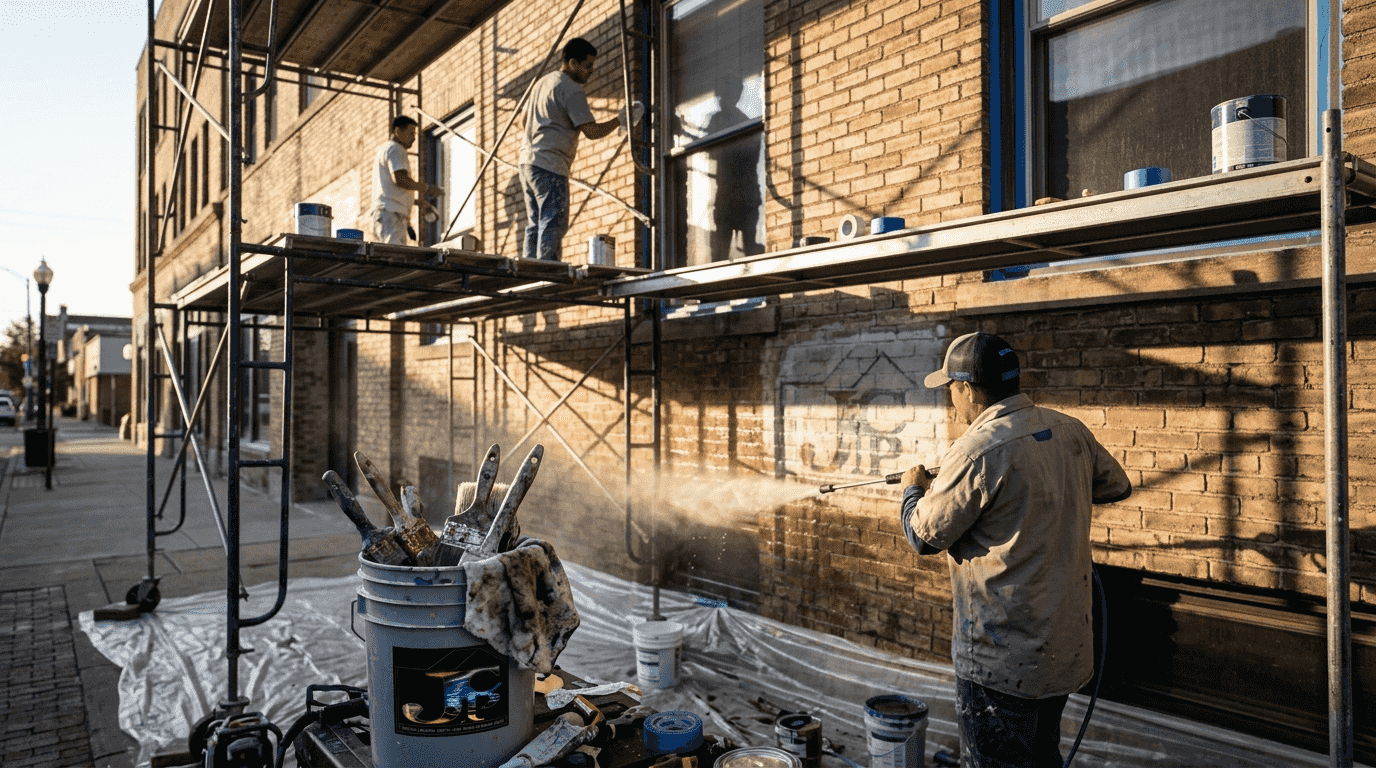
Surface preparation determines paint longevity more than any other factor in commercial repainting projects. Proper prep including power washing, scraping, and priming ensures paint adhesion that prevents premature failure and extends coating life by years. Skipping these essential steps creates conditions where new paint peels, bubbles, or flakes within months rather than lasting its expected lifespan.
Professional preparation follows systematic protocols that address each surface type appropriately:
Power washing removes accumulated dirt, mildew, and chalked paint using controlled pressure that cleans without damaging substrates
Scraping eliminates loose or failing paint that would prevent new coatings from bonding properly
Sanding smooths rough areas and feathers edges where old paint meets bare surfaces
Patching fills cracks, holes, and damaged sections with appropriate repair compounds
Priming seals porous surfaces and provides uniform base for topcoat adhesion
Each preparation step serves specific purposes that contribute to final paint performance. Power washing loosens contaminants that interfere with paint bonding, but operators must calibrate pressure levels to avoid surface etching or water intrusion behind siding materials. Concrete and masonry tolerate higher pressures than wood or stucco, requiring experienced technicians who adjust techniques for each substrate.
Scraping and sanding create mechanical tooth that helps new paint grip surfaces effectively. These processes remove oxidized layers, smooth weathered wood grain, and eliminate paint buildup that creates uneven finishes. Proper sanding generates dust that requires containment measures protecting building occupants and meeting environmental regulations.
Priming blocks stains, seals porous materials, and improves topcoat coverage that reduces paint consumption. Different primers address specific challenges like tannin bleeding in wood, alkali burns in fresh concrete, or rust prevention on metal surfaces. Selecting appropriate primers for each substrate type prevents common paint failures that necessitate premature repainting.
Pro Tip: Insist on detailed surface inspection reports before repainting begins, documenting existing conditions and recommended prep work to ensure contractors address all necessary repairs.
Neglecting preparation creates multiple failure modes:
Paint peeling occurs when coatings cannot bond to dirty or glossy surfaces
Bubbling develops when moisture trapped beneath paint expands and contracts
Cracking appears when paint applied over unstable substrates follows underlying movement
Staining bleeds through when primers fail to seal tannins or rust
Professional painting crews invest 40-60% of project time in preparation activities because this work directly determines coating durability. Contractors who rush preparation to reduce labor costs deliver inferior results that require frequent repainting, ultimately costing property owners more than properly executed projects.
Mastering surface preparation techniques separates professional contractors from inexperienced painters who focus solely on application speed. Quality preparation requires knowledge of substrate characteristics, appropriate cleaning methods, and compatible repair materials that ensure long-term paint performance.
The benefits of hiring professional painting advantages become evident when comparing properly prepared surfaces to inadequate prep work. Professionals understand how substrate condition, environmental factors, and coating compatibility interact to produce durable finishes that protect your investment.
Cost considerations and maintenance strategies for commercial repainting
Commercial repainting costs vary based on building size, surface condition, access requirements, and coating specifications. Typical exterior painting ranges from $1.50 to $3.00 per square foot, while interior work costs $2.00 to $4.00 per square foot depending on preparation needs and finish quality. These baseline figures increase when projects require extensive repairs, specialty coatings, or complex color schemes.
Cost Factor | Impact on Price | Typical Range |
Surface Condition | Poor condition adds 30-50% for repairs | Baseline to +50% |
Access Difficulty | Scaffolding or lifts increase labor | +15% to +40% |
Coating Quality | Premium paints cost more but last longer | Standard to +25% |
Color Changes | Dark to light requires extra coats | +10% to +20% |
Assessment-based maintenance reduces costs by 35-50% compared to full building repaints by targeting specific elevations or sections showing deterioration. This strategic approach addresses problem areas before damage spreads while deferring work on surfaces still performing adequately. Property managers who adopt assessment-based strategies extend overall paint life cycles and smooth maintenance budgets across multiple years.
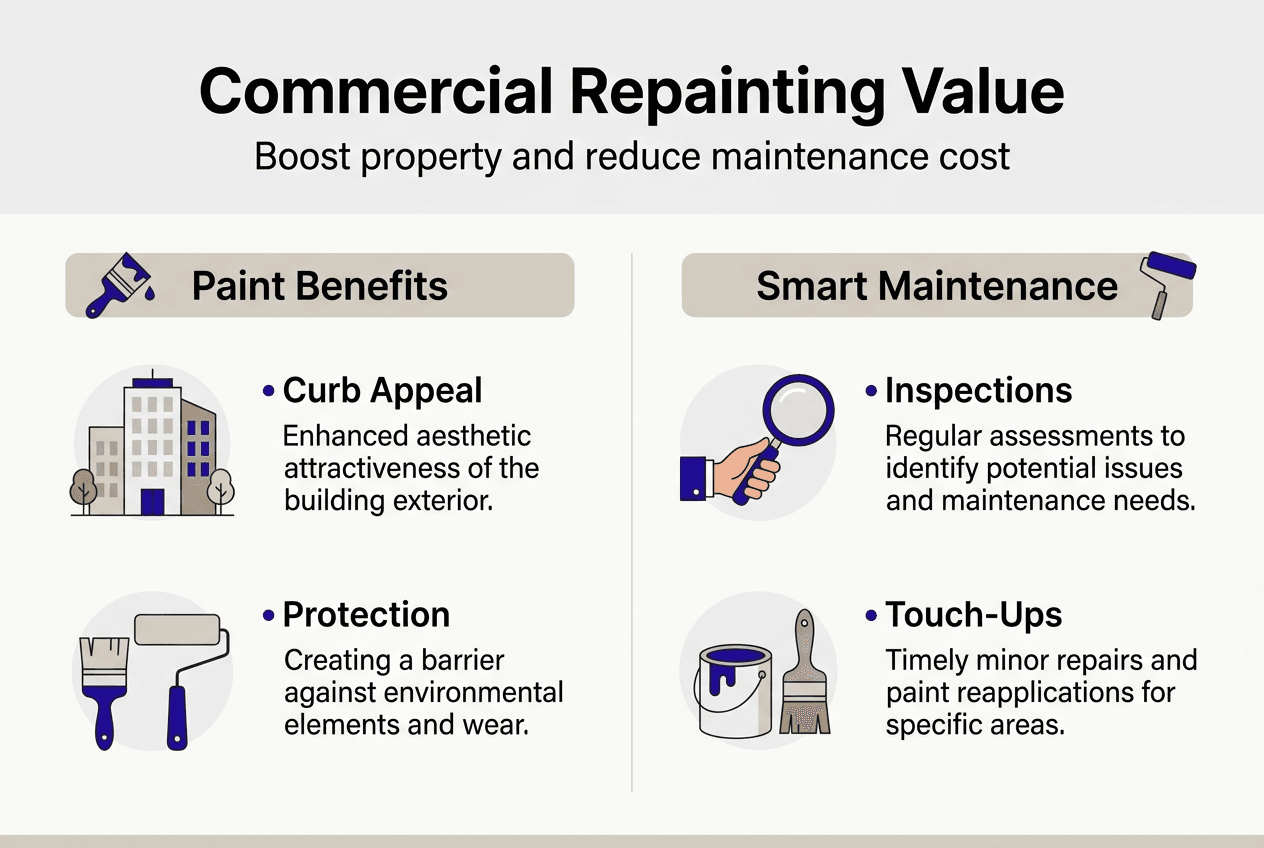
Choosing between full repainting and targeted maintenance depends on overall building condition and budget constraints. Buildings showing uniform deterioration across all elevations benefit from complete repainting that ensures consistent appearance and synchronized maintenance cycles. Properties with isolated problem areas gain cost advantages through selective repainting that addresses only failing sections.
Proactive maintenance strategies include:
Annual inspections identifying early signs of paint failure before widespread damage
Targeted touchups addressing small problem areas preventing expansion
Scheduled power washing removing contaminants that accelerate deterioration
Caulking and sealing maintenance preventing moisture intrusion
Regular inspections support early detection of paint failures, allowing you to address minor issues before they require expensive interventions. Trained inspectors identify chalking, cracking, peeling, and mildew growth that signal coating breakdown. Documenting these conditions through photographs and written reports helps you track deterioration rates and plan maintenance budgets accurately.
Pro Tip: Request detailed cost breakdowns separating preparation, materials, and labor to compare contractor bids accurately and identify where value differences exist.
Paint quality significantly affects long-term costs despite higher initial prices. Premium coatings containing superior pigments and resins last 30-50% longer than economy products, reducing repainting frequency and lifetime costs. When calculating true expenses, factor in extended service life rather than focusing solely on upfront material prices.
Explore completed projects showcasing quality workmanship in our exterior commercial painting portfolio and interior commercial painting examples demonstrating professional results across various building types.
Scheduling flexibility allows contractors to offer competitive pricing during slower periods when crews have availability. Winter months often present opportunities for discounted interior work, while late fall and early spring provide favorable exterior painting conditions at reduced rates. Building relationships with reliable contractors enables you to negotiate preferred pricing and priority scheduling.
Discover expert commercial painting services in Los Angeles
Your commercial property deserves professional repainting that protects your investment while enhancing tenant appeal and market value. Johnny’s Custom Painting brings over 16 years of specialized experience serving Los Angeles property owners who demand quality craftsmanship and reliable service delivery.
Our licensed team understands LA’s unique climate challenges and customizes painting schedules optimized for your building type and traffic patterns. We emphasize comprehensive surface preparation that ensures durable results, using premium low-VOC paints that meet environmental standards while delivering lasting performance. View our exterior commercial painting and interior commercial painting portfolios showcasing successful projects across retail, office, and industrial spaces. Contact Johnny’s Custom Painting today for a free consultation and discover how professional repainting transforms your property’s value and appeal.
Frequently asked questions about repainting commercial buildings
How often should I repaint the exterior of my commercial building in Los Angeles?
Exterior repainting frequency depends on your building type and sun exposure, with most commercial properties requiring attention every 4-10 years. Office buildings typically need repainting every 5-7 years, while high-traffic retail spaces benefit from 4-6 year cycles. South and west-facing walls in LA’s intense sun may require repainting 40-60% more frequently than shaded elevations.
What factors influence the cost of commercial repainting?
Repainting costs vary based on surface condition, building size, access requirements, and coating quality. Extensive surface repairs, difficult access requiring scaffolding, and premium paint selections increase project expenses. Assessment-based maintenance targeting specific problem areas rather than full building repaints can reduce costs by 35-50% while maintaining property appearance.
Why is surface preparation so important before repainting?
Proper surface preparation ensures paint adhesion that prevents premature failure and extends coating life significantly. Power washing, scraping, sanding, and priming remove contaminants and create conditions for strong paint bonding. Skipping these essential steps causes peeling, bubbling, and early paint failure that necessitates frequent repainting and increases long-term costs.
Can repainting improve my building’s market value?
Strategic repainting directly enhances property value by improving curb appeal and signaling proactive maintenance to buyers and appraisers. Fresh paint protects building structures from environmental damage while creating positive first impressions that attract quality tenants and support premium rental rates. Well-maintained exteriors can increase property valuations and reduce time on market when selling.
What maintenance strategies can reduce repainting costs over time?
Implement annual inspections identifying early paint deterioration before widespread damage occurs, allowing targeted repairs rather than full repaints. Schedule regular power washing to remove contaminants accelerating paint breakdown, and maintain caulking and sealing preventing moisture intrusion. Learn more about comprehensive commercial painting services explained to develop cost-effective maintenance programs.
Recommended
Comments