
Why safety is essential in painting: homeowner guide for LA

TL;DR:
Safety in LA painting involves hazard management, legal compliance, and proper equipment use.
Regulations like OSHA, EPA, and California laws enforce safety standards and impose penalties for violations.
Using low-VOC paints and professional protocols protects occupant health and ensures long-term project success.
Painting your home seems straightforward until something goes wrong. In Los Angeles, where thousands of properties were built before 1978, the risks hiding behind old paint layers are very real. Falls, toxic dust, chemical fumes, and legal liability can turn a routine refresh into a costly disaster. Most homeowners and property managers focus on color choices and price quotes, but the safety decisions made before a single brush stroke happens are what truly protect your health, your property, and your wallet. This guide breaks down exactly what safety looks like in a professional LA painting project, and why it matters more than you might think.
Table of Contents
Key Takeaways
Point | Details |
Safety is non-negotiable | Proper safety protects health, legal interests, and property value during any LA painting project. |
Regulations matter | OSHA, EPA, and California laws require licensed, insured, and lead-safe certified pros to avoid fines and lawsuits. |
Low-VOC paints boost health | Choosing eco-friendly paints means safer air for building occupants without sacrificing durability. |
Professional prep pays off | Certified pros use advanced safety steps and maintenance strategies that cut costs and keep properties in top shape. |
Why safety is critical in painting projects
Painting looks simple from the outside. But professional crews deal with a serious list of hazards every single day. Falls are the most immediate danger. Scaffolding falls account for 25% of all fatal construction falls, causing roughly 4,500 injuries and 60 to 80 deaths each year. OSHA requires guardrails and personal fall arrest systems on scaffolds above 10 feet, and OSHA painting safety standards under 29 CFR 1926 and 1910 set strict rules for fall protection, respiratory programs, and chemical exposure limits.
In Los Angeles specifically, the hazard list goes deeper. Homes built before 1978 frequently contain lead-based paint and asbestos in walls, ceilings, and trim. Disturbing these materials without proper containment sends toxic dust into the air, putting everyone in the building at risk. OSHA sets the permissible exposure limit for lead at 50 micrograms per cubic meter of air, a threshold that is easy to exceed during sanding or scraping without the right equipment.
Chemical exposure from paint fumes is another underestimated risk. Traditional paints release volatile organic compounds, or VOCs, which can cause headaches, dizziness, and long-term respiratory damage. Fire risk is also real: solvent-based products are flammable, and improper storage or ventilation can create dangerous conditions on site.
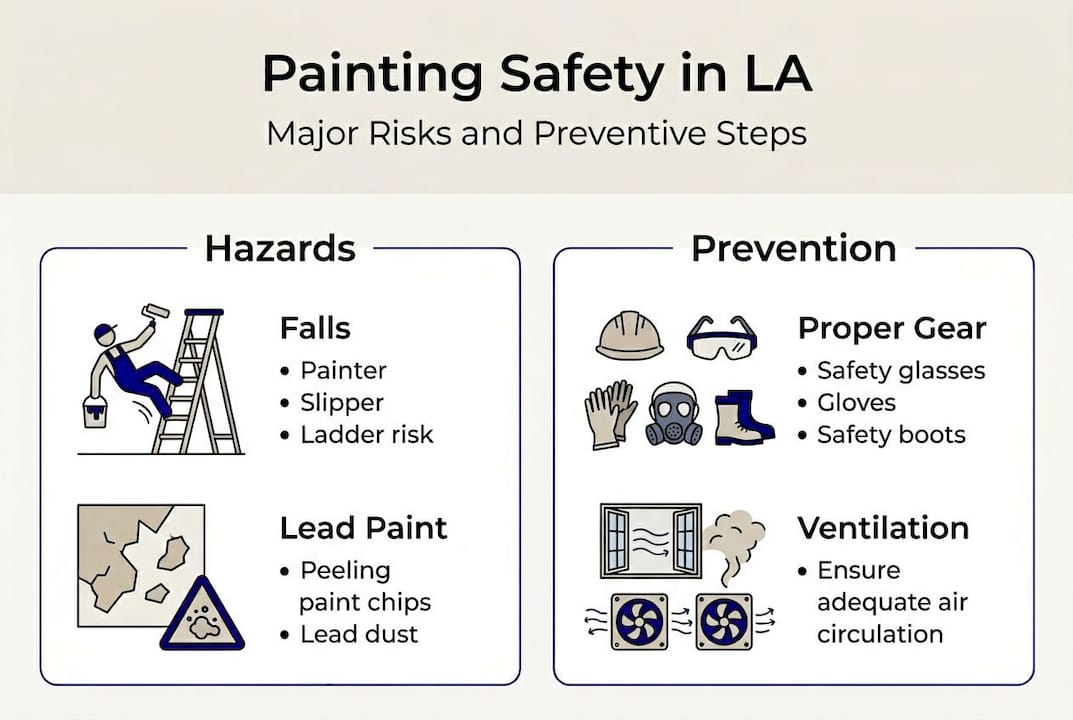
For property owners and managers, the consequences of ignoring these risks go beyond health. If a worker is injured on your property due to unsafe conditions, you may share legal liability. Fines, lawsuits, and even denied insurance claims are all possible outcomes. Check out LA painting best practices for a closer look at how professional methods prevent these problems from the start.
Top risks for owners and managers when safety is neglected:
Worker injury lawsuits and legal liability
Lead or asbestos contamination requiring expensive remediation
Fines from OSHA, EPA, or California state agencies
Denied insurance claims due to non-compliant work
Structural or surface damage from improper prep and chemical use
Skipping safety steps does not save time. It shifts risk from the job site directly onto the property owner.
Key regulations: OSHA, EPA, and California rules
LA painting projects do not operate in a legal vacuum. A clear set of federal, state, and local rules governs how work must be done, who can do it, and what happens when those rules are broken.
The EPA Lead Renovation, Repair and Painting Rule is one of the most important for LA homeowners. Any renovation disturbing more than six square feet of lead paint in a pre-1978 home must be performed by an EPA Lead-Safe Certified contractor. Property managers are legally required to disclose known lead hazards and hire certified firms. Starting in January 2026, fines for violations can reach $40,000 per incident.
On the contractor side, California requires painters to hold a CSLB C-33 license, carry $1 million in liability insurance, and maintain workers’ compensation coverage. Professional crews also spend 60 to 70 percent of their project time on surface preparation, which is where most safety risks are either controlled or ignored. DIY work skips these steps and exposes both the worker and the property owner to serious legal and health consequences.
Regulation | Agency | Key requirement | Penalty for non-compliance |
Fall protection standards | OSHA | Guardrails or PFAS above 6 to 10 ft | Fines up to $15,625 per violation |
Lead RRP Rule | EPA | Certified contractors for pre-1978 homes | Up to $40,000 per violation |
Contractor licensing | CSLB | C-33 license required | Work stoppage, fines, civil liability |
Air quality standards | Cal/OSHA and SCAQMD | VOC limits, ventilation requirements | Project shutdown, fines |
Learn more about LA painter licensing rules and what California painter insurance actually covers before you hire anyone. Working with insured LA painting contractors is not just smart, it is often legally required.
Penalties for non-compliance at a glance:
OSHA fines starting at $1,190 per serious violation
EPA lead violations up to $40,000 per incident in 2026
CSLB unlicensed contractor penalties including project shutdowns
Civil lawsuits from injured workers or affected tenants
Eco-friendly and healthy: The safety benefits of low-VOC paints
Regulations set the floor. But the best LA contractors go further by choosing paints that protect occupant health beyond what the law requires. Low-VOC paints, which contain fewer than 50 grams per liter of volatile organic compounds, are the standard for health-conscious projects. Low-VOC paint options reduce the risk of headaches, respiratory irritation, and long-term chemical exposure while meeting California’s strict air quality regulations. And they last just as long as traditional paints, with a typical lifespan of 7 to 15 years.
For LA homeowners, this matters a lot. California’s South Coast Air Quality Management District sets some of the tightest VOC limits in the country, and using compliant products keeps your project on the right side of local law.
Feature | Traditional paint | Low-VOC paint |
VOC content | 150 to 400+ g/L | Under 50 g/L |
Health risk | Higher (fumes, irritants) | Lower (safer for occupants) |
Durability | 5 to 10 years | 7 to 15 years |
Cost | Lower upfront | Slightly higher upfront |
CA compliance | Often non-compliant | Fully compliant |
Pro Tip: Even with low-VOC paints, keep windows open and fans running during and after application. Ventilation speeds up off-gassing and helps occupants return to the space sooner.
The upfront cost difference is real but small. What you gain is faster reoccupancy, better indoor air quality, and a project that holds up to California’s evolving environmental standards. Read more about low-VOC paint explained and how to apply low-VOC paints for practical guidance.
Benefits of low-VOC paint for LA homes:
Safer air quality during and after painting
Compliance with California and SCAQMD air regulations
Reduced odor and faster reentry for families and tenants
Lower long-term health risks for sensitive occupants
Comparable durability to conventional products
Professional preparation, containment, and maintenance for long-term safety
Knowing the rules and choosing the right products is only part of the picture. How a crew actually executes the work determines whether safety standards hold up in practice. Professional painters follow a structured process that DIY approaches almost never replicate.
Assessment-based maintenance for property managers cuts costs 35 to 50 percent compared to full repaints by targeting only the areas that have actually degraded. Proper surface preparation also extends the life of a paint job by 3 to 5 years. Meanwhile, proper training and equipment can reduce fall-related incidents by 70 to 80 percent on active job sites.
Pro safety steps before, during, and after painting:
Assess the site for lead, asbestos, structural hazards, and surface condition before any work begins
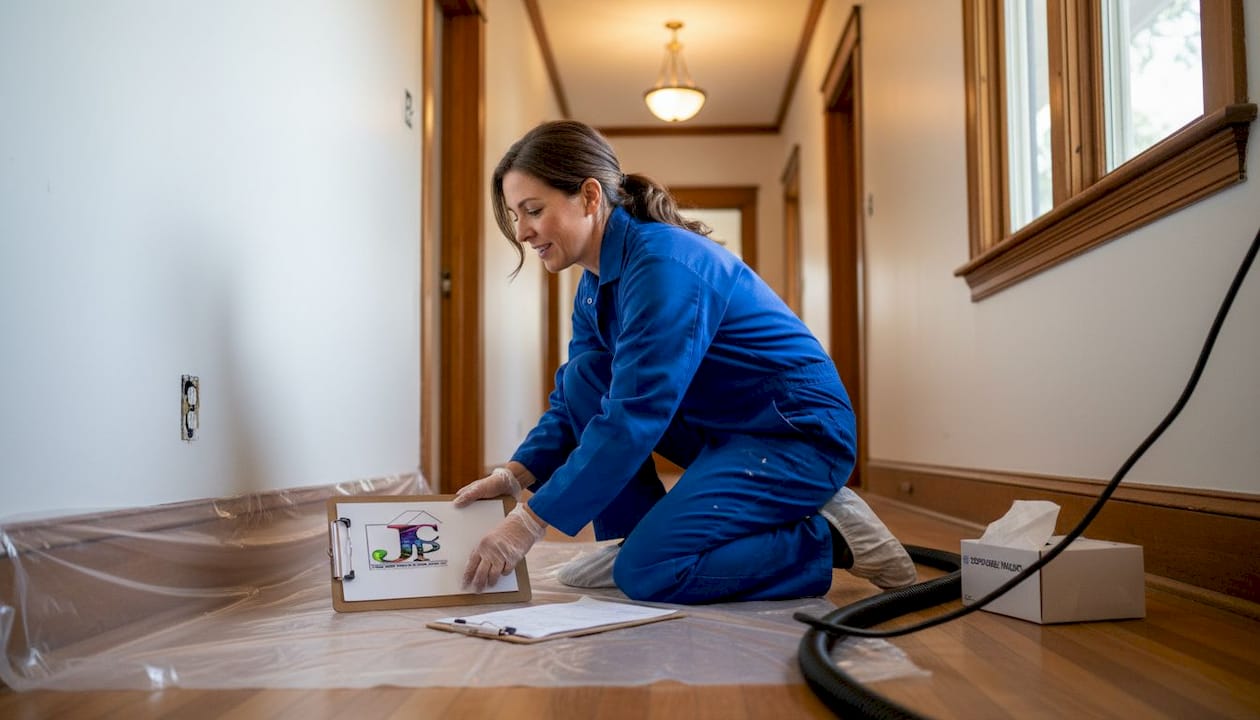
Set up containment barriers using plastic sheeting to isolate work areas and prevent dust migration
Establish ventilation with fans and open windows to manage fumes and airborne particles
Use HEPA vacuums during sanding and scraping to capture toxic dust at the source
Wear proper PPE including respirators, gloves, and eye protection throughout the project
Conduct a thorough cleanup using wet-wipe methods and HEPA vacuuming before removing containment
Schedule ongoing inspections to catch peeling, cracking, or moisture damage before it becomes a larger problem
Pro Tip: Scheduling a professional assessment every two to three years for older LA properties catches minor paint failures early, preventing lead dust exposure and avoiding the cost of full remediation later.
The difference between professional and DIY work is clearest in older LA homes. A crew equipped with HEPA vacuums, containment barriers, and proper respiratory protection handles hazardous materials safely. A DIY approach with a hardware store mask and a shop vac does not. Explore painting prep and maintenance to understand what a thorough professional process actually looks like.
The uncomfortable truth: Why cutting corners on safety never pays off in LA
After 16 years working on LA properties, we have seen the pattern repeat itself. A property owner gets three bids, picks the lowest one, and asks no questions about licensing, insurance, or lead testing. The job gets done fast. Then, six months later, a tenant reports health symptoms. Or a worker files an injury claim. Or an inspector finds unpermitted work involving hazardous materials.
The remediation costs alone for a lead contamination event can run $10,000 to $50,000 or more, far exceeding what was saved on the original bid. DIY risks like lead and asbestos exposure are not hypothetical. They are documented, recurring problems in pre-1978 LA homes.
What frustrates us most is that these outcomes are entirely preventable. Hiring a licensed, insured contractor who follows proper safety protocols costs more upfront. But it eliminates a category of financial and legal risk that can follow a property owner for years. The cheapest bid rarely accounts for safety equipment, proper disposal, or certified labor. Those costs get cut somewhere, and that somewhere is usually the step that protects you.
Investing in professional painting results is not just about aesthetics. It is about protecting your property, your tenants, and your legal standing in a city with some of the strictest building and environmental standards in the country.
Ready for a safer, healthier painting experience in Los Angeles?
If this guide has shown you anything, it is that painting safely in LA requires more than a good eye for color. It requires certified professionals, compliant materials, and a process built around protecting people and property.

At Johnny’s Custom Painting, we bring over 16 years of licensed, insured experience to every project in Los Angeles. We use low-VOC paints, follow all OSHA and EPA requirements, and handle hazardous material assessments before any work begins. Browse our exterior residential painting and interior residential painting portfolios to see our work, or contact us at Johnny’s Custom Painting to request your free estimate today.
Frequently asked questions
What are the legal requirements for painting older homes in LA?
Renovating pre-1978 homes in LA requires hiring EPA Lead-Safe Certified contractors for any work disturbing more than six square feet of lead paint, along with certified asbestos removal when hazardous materials are present.
How do low-VOC paints improve safety and air quality?
Low-VOC paints reduce health risks such as headaches and respiratory irritation by emitting far fewer harmful chemicals, making indoor air safer for families and tenants during and after painting.
What insurance should LA painting contractors have?
In California, painters must carry a CSLB C-33 license, $1 million in liability coverage, and workers’ compensation insurance to legally protect clients from accidents and financial exposure.
Why shouldn’t property managers DIY painting in older buildings?
DIY painting exposes managers to lead and asbestos hazards, violates EPA and OSHA regulations, and creates legal liability and potential fines that far exceed the cost of hiring a certified professional.
How does safety-conscious painting save money long-term?
Assessment-based maintenance cuts costs 35 to 50 percent compared to full repaints by addressing only degraded areas early, while proper preparation extends paint life by 3 to 5 years.
Recommended
Comments